
High-Density Interconnect (HDI) PCBs are advanced circuit boards that use sequential lamination and microvias to pack more functionality into smaller spaces. They are the backbone of modern compact electronics, from smartphones to medical devices. This guide explains how HDI PCBs work, why they are essential for compact designs, and what to look for in a manufacturing partner in China.
How HDI PCBs Work
HDI PCBs achieve their density through sequential lamination, where multiple layers of copper-clad laminate are stacked with prepreg and pressed under heat and pressure. Microvias – tiny holes drilled by laser or mechanical methods – connect these layers, allowing signals to route vertically between levels. This three-dimensional routing capability is what sets HDI apart from standard PCBs.
The process begins with inner-layer boards that are drilled, plated, and laminated together. Advanced techniques can produce trace widths and spaces as low as 1.8 mils (approximately 45 microns). Finished board thickness can range from 0.1 mm to 12 mm, depending on layer count. The IPC (Institute for Interconnecting and Packaging Electronic Circuits) provides IPC standards such as IPC-6018 and IPC-2226, which define quality and performance requirements for HDI boards.
Modern HDI boards support up to 64 layers, with via diameters as small as 0.1 mm. This allows designers to pack more components into a smaller area while maintaining signal integrity. Manufacturers like OurPCB use Siemens and Yamaha SMT lines to ensure precision and consistency.
Why HDI PCBs Matter for Compact Designs
The drive toward miniaturization in electronics places immense pressure on circuit board technology. HDI PCBs directly address this challenge by offering:
- Higher component density without increasing board size
- Improved signal integrity due to shorter signal paths
- Better thermal management through thinner substrates and metal-core options
- Reduced weight and thickness, critical for portable devices
These advantages make HDI the preferred choice for smartphones, tablets, wearables, medical implants, and IoT modules. As devices become more complex, the ability to integrate more functions in a compact form factor becomes a competitive differentiator.
China's PCB industry has matured significantly, with manufacturers investing in state-of-the-art equipment and certifications. Many hold ISO 9001, ISO 13485, and IATF 16949 certifications, ensuring rigorous quality management. When selecting a china hdi pcb partner, it is important to evaluate their layer capabilities, material options, turnaround times, and customer support.
OurPCB: A Leading China HDI PCB Supplier
OurPCB’s manufacturing journey began with our Shijiazhuang factory in 2007.
OurPCB operates two major factories in China. The Shijiazhuang facility spans over 10,000 square meters, with 90% dedicated to advanced PCB assembly services. Over 300 skilled technicians manage 5 SIEMENS SMT lines to produce high-quality PCBs. In 2017, a second factory was built in Shenzhen, covering 5,000 square meters with 8 YAMAHA SMT lines, including X-ray and AOI capabilities, staffed by 110 dedicated employees.
The company holds certifications including ISO 9001:2015, ISO 13485:2016, IATF 16949:2016, and IPC-A-610. They offer HDI boards up to 64 layers with minimum line and track widths of 1.8 mils and finished board thickness from 0.1 mm to 12 mm. Services range from PCB assembly and quick-turn prototyping to high-volume production and turnkey solutions.
Trusted by over 3,000 customers worldwide, OurPCB provides PCB quotes in 2 hours and PCBA quotes in 2 working days, with express global shipping in secure packaging.
Common Questions About HDI PCBs
What is an HDI PCB?
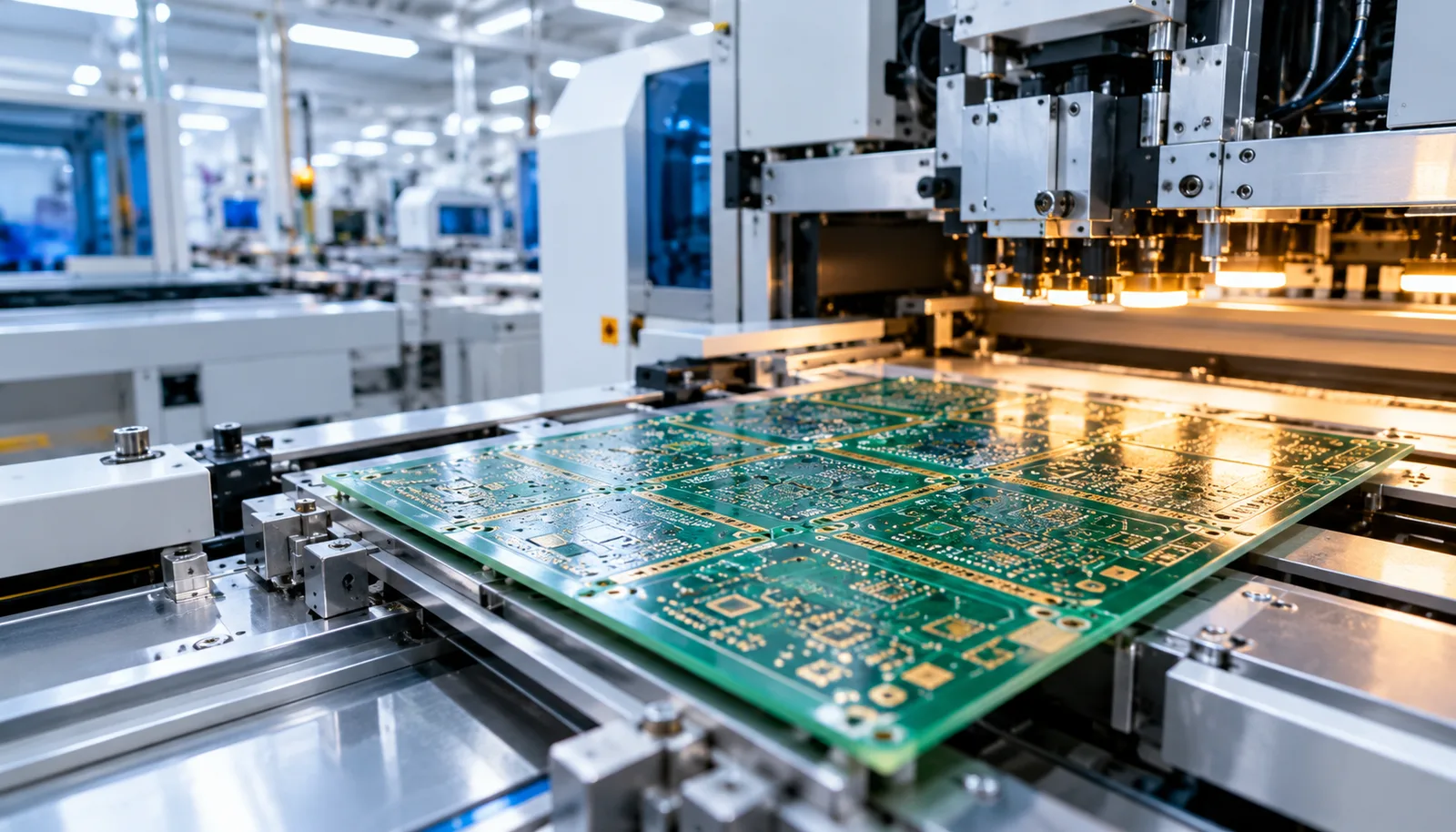
An HDI (High-Density Interconnect) PCB is a type of printed circuit board that uses sequential lamination and microvias to achieve higher circuit density in a compact form factor.
What are the key specifications of HDI PCBs?
HDI PCBs can support up to 64 layers, with minimum line and track widths of 1.8 mils. Finished board thickness can range from 0.1 mm to 12 mm.
What certifications should a reliable HDI PCB manufacturer hold?
Look for ISO 9001:2015 for quality management, ISO 13485:2016 for medical devices, IATF 16949:2016 for automotive, and IPC-A-610 for electronics assembly acceptability.
What services do HDI PCB manufacturers typically offer?
Services often include PCB assembly, quick-turn prototyping, high-volume production, flexible PCB manufacturing, turnkey assembly, and design services.