
Understanding Your Thermal Requirements
Every custom heat sink project starts with a clear picture of the thermal challenge. The primary job of a heat sink is to draw heat away from a component and release it into the surrounding air. Before you approach any supplier, you need to know your device's maximum heat load, measured in watts, and the maximum allowable junction temperature. These two numbers define the minimum thermal resistance your heat sink must achieve.
The operating environment matters just as much. Still air requires larger surface areas or heat pipes, while forced convection from a fan lets you use a more compact design. Ambient temperature range, altitude, and exposure to dust or moisture all influence material choice and fin geometry. A supplier that asks about these details early is one that understands real-world performance.
Material Selection for Performance and Cost
The two most common materials for custom heat sinks are aluminum and copper. Aluminum is lighter, more affordable, and easier to machine, making it the default choice for most applications. Copper offers roughly double the thermal conductivity, which is valuable when space is tight or heat loads are high, but it adds weight and cost.
Some projects call for hybrid designs — a copper base plate pressed or bonded to aluminum fins — to balance performance and budget. When sourcing a custom heat sink in China, confirm that your supplier stocks the specific alloy grades you need. For example, 6061-T6 aluminum and C11000 copper are industry standards for CNC-machined thermal components. According to engineering guides from the Electronics Cooling magazine, material selection is the single largest driver of both thermal performance and unit cost in machined heat sinks.
Design Geometry and Fin Configuration
Fin geometry directly determines how much surface area contacts the surrounding air. Dense, closely spaced fins add surface area but restrict airflow, which can backfire in natural convection setups. Wider fin spacing works better with low-pressure fans. The fin thickness must also be balanced against the machining process — very thin fins require precise toolpaths to avoid warping or breakage.
Base plate thickness is another critical variable. A thicker base spreads heat more evenly across the fins but adds thermal resistance through the extra material. Finite element analysis (FEA) software helps engineers find the optimal thickness for a given heat load. When reviewing quotes from a custom heat sink China partner, ask whether they provide DFM (Design for Manufacturability) feedback that addresses these trade-offs.
A well-optimized fin design can improve thermal performance by 30 percent or more without changing materials.
Surface Treatment and Finishing
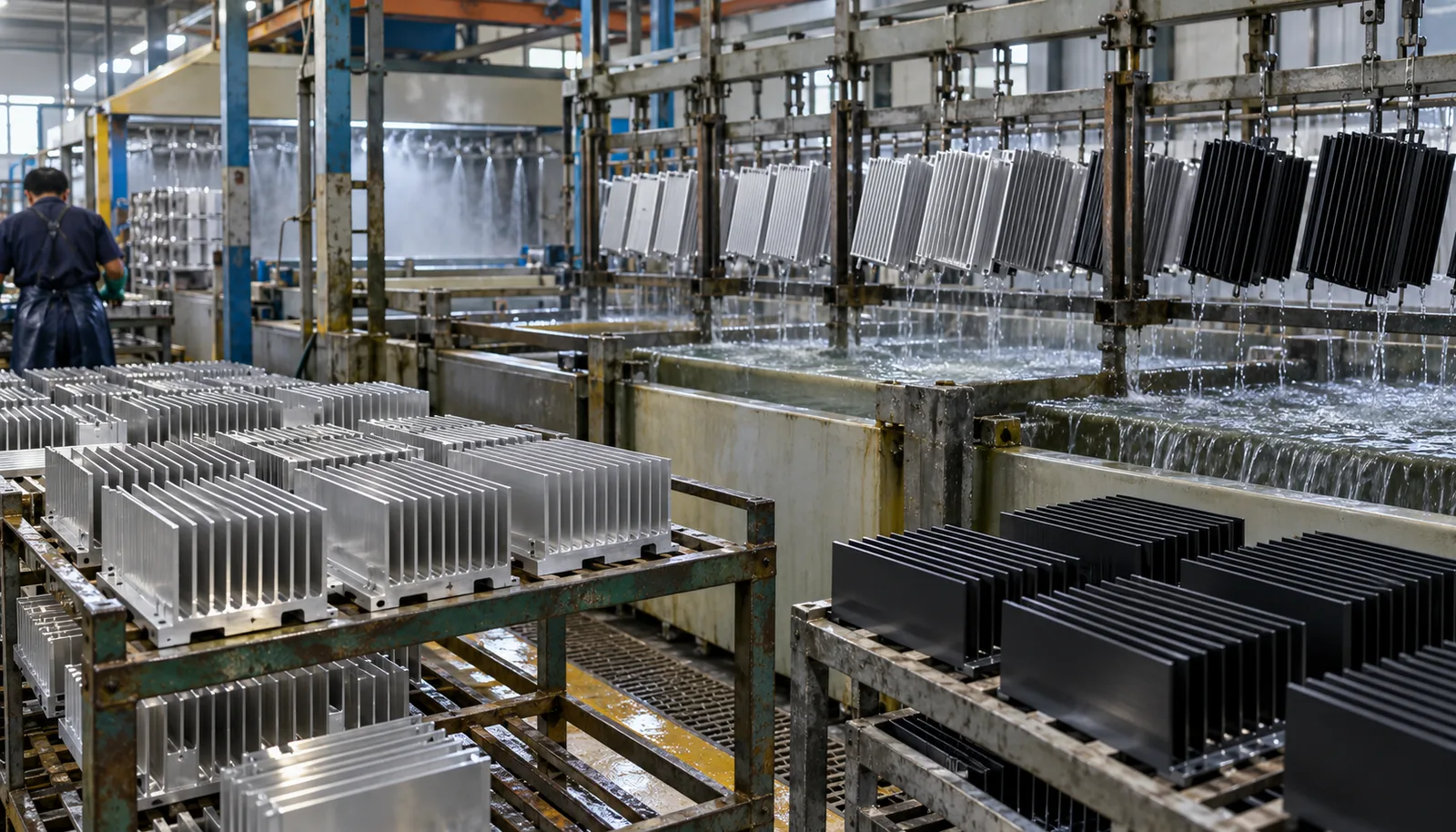
The surface condition of a heat sink affects both its thermal performance and its long-term reliability. As-machined surfaces have a certain roughness that can increase effective surface area slightly, but the real gains come from coatings. Anodizing aluminum adds a thin, electrically insulating oxide layer that resists corrosion and improves emissivity for radiative cooling. Black anodizing is the most common choice for electronics heat sinks.
For copper, nickel plating prevents tarnishing and maintains solderability for heat-pipe attachment. Some applications require no coating at all to maximize thermal contact, but bare metal is more susceptible to oxidation. Discuss your operating environment with the manufacturer so they can recommend the appropriate finish. Industry research published by the Advanced Thermal Solutions technical library confirms that surface treatment can alter effective thermal resistance by 5–15 percent depending on the coating type and thickness.
Manufacturing Tolerances and Quality Assurance
Custom heat sinks often interface with precision components such as CPUs, power modules, or laser diodes. Flatness and parallelism tolerances on the mounting surface directly affect thermal interface resistance. A gap of just a few microns can significantly degrade heat transfer. Look for a CNC machining partner that holds ISO 9001 certification and can demonstrate tolerances down to ±0.003 mm.
Inspection processes matter too. Coordinate measuring machines (CMM) and surface profilometers should be part of the quality workflow. When you evaluate a potential supplier, ask about their statistical process control and how they handle non-conforming parts. A reliable manufacturer will provide full traceability from raw material to finished piece. For a deeper look at how precision machining capabilities align with complex part production, read about XTJ CNC and its approach to high-tolerance manufacturing across multiple industries.
Lead Time, Minimum Order Quantity, and Cost Structure
Production speed and flexibility are often deciding factors in heat sink procurement. Many projects require prototypes within one to two weeks to validate thermal performance before committing to volume production. Some China-based CNC shops offer rapid prototyping in as few as five days, which can compress your development cycle significantly.
Minimum order quantity (MOQ) is another consideration. If you are developing a new product, you may need only 10 or 20 units for testing. A supplier with no MOQ allows you to validate the design without overcommitting. On the cost side, the price per unit drops with volume, but be sure to compare quotes that include material sourcing, machining, surface treatment, and packaging. Hidden tooling charges or setup fees can erase apparent savings.
Certifications and Industry Experience
Certifications such as ISO 9001:2015 and IATF 16949 indicate that a manufacturer follows documented quality management systems. These are especially important if your heat sink will be used in automotive, medical, or aerospace applications where failure is not an option. RoHS and REACH compliance is standard for electronics sold in European markets.
Experience with similar thermal management projects is also valuable. A shop that has machined heat sinks for power electronics, LED lighting, or telecommunications equipment will already understand common pitfalls such as burr formation in thin fins or warping during anodizing. Ask for case studies or references specific to heat sink production rather than general machining work.
Communication and Engineering Support
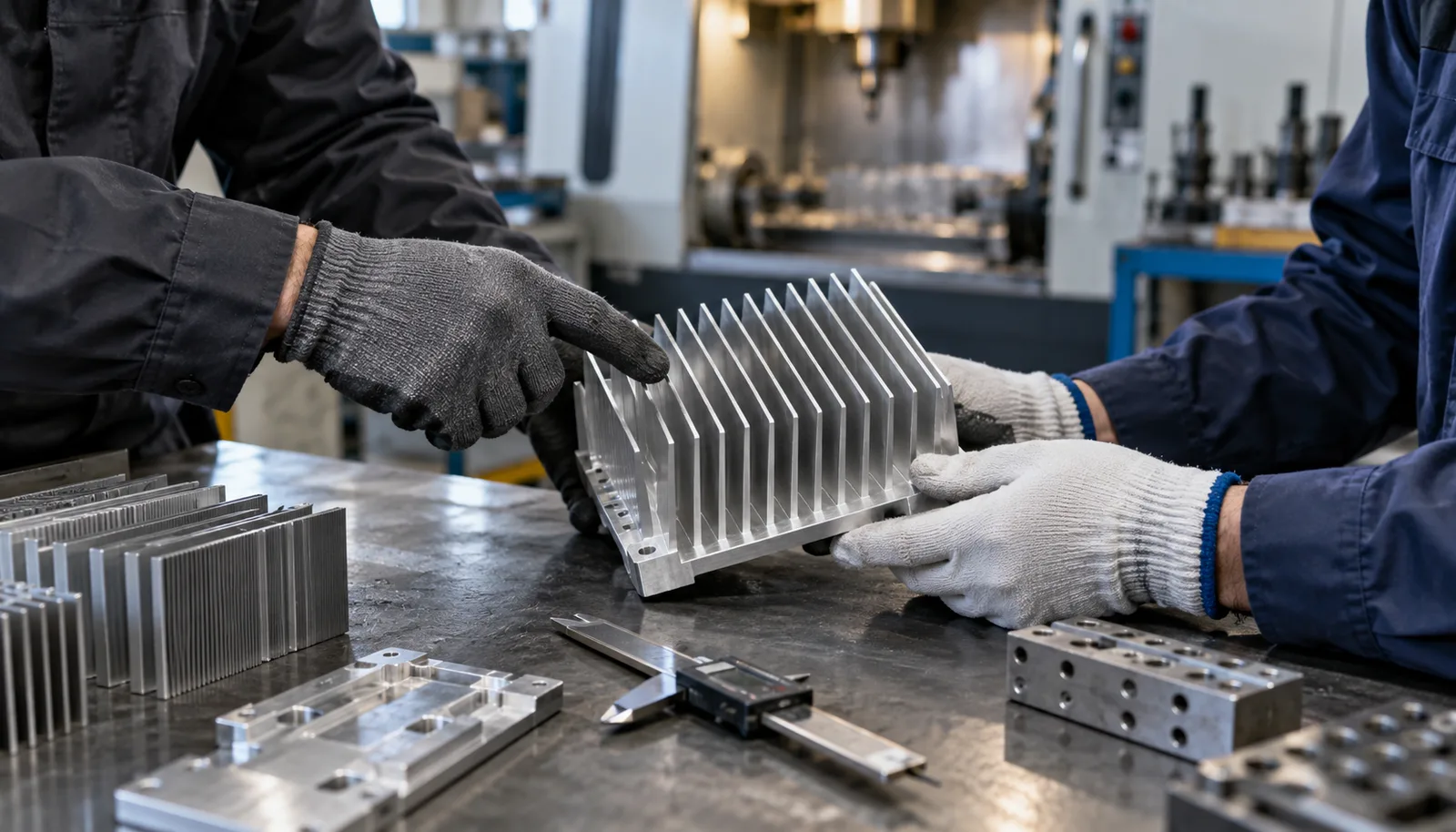
When sourcing a custom heat sink from China, language and time-zone differences can create friction. A supplier with English-speaking engineering staff and a responsive project management process will save you weeks of back-and-forth. Look for a partner that offers DFM analysis as a standard step — this is where experienced machinists flag potential issues in your design before cutting metal.
The best suppliers act as collaborators, not just order-takers. They should be willing to suggest alternative materials, recommend fin geometries, and propose cost-reduction strategies without sacrificing performance. Transparent quoting that breaks out material, labor, and finishing costs helps you make informed decisions.
Logistics and Intellectual Property Protection
Shipping large volumes of metal from China to the United States or Europe adds freight cost and transit time. Factor in Incoterms, customs clearance, and potential tariffs when comparing total landed cost. Some manufacturers offer consolidated shipping or warehousing options that reduce per-unit freight.
Intellectual property protection is another concern when sharing CAD files overseas. Verify that your supplier has data security policies in place, such as signed NDAs, restricted file access, and server encryption. Reputable CNC machining companies treat customer designs as confidential and will not share or reuse them without permission.
Making the Final Selection
Choosing the right partner for a custom heat sink in China comes down to matching their capabilities with your project's specific demands. Prioritize suppliers that combine thermal engineering knowledge with precision machining, robust quality systems, and clear communication. Request sample parts or test coupons to evaluate surface finish and dimensional accuracy before placing a production order.
By working through these ten factors systematically, you can select a manufacturer that delivers a heat sink meeting your thermal targets, budget, and timeline. The investment in upfront evaluation pays back in fewer design iterations, faster time to market, and a product that performs reliably in the field.